
A CLEAN SLATE – OR IS IT?
For the first time since the dawn of devolution, the Welsh Government has the opportunity to pursue a different path to the one pursued by the dead hand that has governed our country until now. A clean slate at last!
In circumstances that would have been hard to imagine just a few years ago, Plaid Cymru came to power and leads a minority government in the Senedd. A combination of disillusionment with Starmer, the rise of Reform, and weariness with Welsh Labour led enough people to turn to Plaid Cymru. It could be said that an unofficial coalition—comprising Plaid Cymru’s core supporters, former Welsh Labour supporters, those seeking a more progressive party, those wanting to stop Reform, and those desiring change after decades of disappointment combined to place power in the hands of Rhun ap Iorwerth and his party.
There is a world of difference between Plaid Cymru and Reform, yet on the doorstep, people were heard debating which of these two parties to support, so great was their desire for change. This Government, therefore, enjoys only conditional support and will effectively be on a trial period throughout this parliamentary term.
One eye will always be on preparing for the next election in an effort to retain the support gained this May. That is why it is crucial for those of us who wish to see socialism become a way of life to keep pressing for the prioritisation of community over finance. Otherwise, we shall see nothing more than superficial changes.
Will this new page be smudged by the grubby fingers of the zealots of growth before the new Government even picks up the pen?
SOCIALISM UNDER A PLAID CYMRU GOVERNMENT?
We know there are committed socialists within the ranks of Plaid Cymru—both ordinary members and Senedd Members. People who see capitalism and militarism as the scourges that have spawned the crises currently overwhelming the world, and which are baring their teeth here in Cymru. People who acknowledge that human actions are responsible for the climate emergency engulfing us. People who yearn to see the Welsh Government do everything in its power to offer an alternative way of governing the country for the benefit of its people.
These are the people we should support in order to create conditions where we can live life to the full. A country where child poverty, fuel poverty, food poverty, and housing poverty vanish. A country where wealth lies in people, not possessions. A country where strength lies in character, not weapons. A country where community triumphs over individualism. A country where nurturing our land, seas, and skies replaces resource extraction. A country that rejects militarism and chooses peace.
How likely is it for socialism to be realised?
How difficult will it be to break free from the shackles of Westminster? How independent would an ‘independent’ Wales actually be?
The expectations—and the difficulties—are immense. Yet, at a time when there is an opportunity to redirect a nation’s aspirations, sticking to the ‘usual’ way of governing our country would mean that capitalism would still hold the upper hand—albeit perhaps dressed in Welsh language and attire, and with a faint flavour of leeks.
And in the long run, were Wales to become independent (to the extent that any country can be truly independent), that independence would prove to be a pyrrhic victory without a complete revolution of the political institutions that uphold a system which keeps power in the hands of the wealthy, in the form of multinational corporations.
Owain Hanmer’s insightful article, “Welsh Independence and the Lure of the Irish”, offers a clear warning to Wales. Freedom is partial when your economy has been sold off to massive US corporations. The contrast between the heroic aspirations of the socialist republic championed by James Connolly and the current reality—acting as handmaidens to the vultures of capitalism—is one which our current government in Cardiff Bay ought to be aware of. Here are Connolly’s own words:
“The Irishman frees himself from slavery when he realizes the truth that the capitalist system is the most foreign thing in Ireland. The Irish question is a social question. The whole age-long fight of the Irish people against their oppressors resolves itself in the last analysis into a fight for the mastery of the means of life, the sources of production, in Ireland”.
And again:
“If you remove the English Army tomorrow and hoist the green flag over Dublin Castle., unless you set about the organization of the Socialist Republic your efforts will be in vain. England will still rule you. She would rule you through her capitalists, through her landlords, through her financiers, through the whole array of commercial and individualist institutions she has planted in this country and watered with the tears of our mothers and the blood of our martyrs”.
It could be argued that the sum and substance of Welsh Labour governments has been the management of decline, while more often than not deferring to central policies from London and the ruthless forces of capitalism. The volume “The Welsh Way” offered a rigorous critique of neo-liberal Wales.
Is it any wonder that Welsh Labour lost the election, given the party’s association with Keir Starmer’s fate? These were neo-liberal policies that prioritized corporations, extractive industries, and support for the established order—not to mention the deafening silence regarding the slaughter in Gaza. There have been few, if any, genuine changes, despite the fine but toothless words of the legislation cited ad nauseam: the Wellbeing of Future Generations Act. If Cymru is indeed to be an exemplar of compassionate statecraft the Act should be strengthened and given meaningful powers. It should be embedded in all aspects of Welsh Government thinking, and indeed the wider society.
LEEK CAPITALISM?
What, then, are the early signs from the current Government that it intends to break new ground? If the opportunity to do so is missed at the outset, it will be difficult to change direction later. Although there are encouraging signs regarding social issues and well-being—and a much firmer stance against Westminster alongside a push for significantly more powers—we have yet to see much evidence of an appetite to overturn the capitalist order in all its greedy, destructive brutality.
Concern must be expressed that some of the old habits of the Welsh Labour Government look set to continue under the new administration.
Let’s look at recent developments under the oversight of Adam Price, the Cabinet Minister for Enterprise, Connectivity and Energy.
The arms industry in Wales
There have been strong protests against the Arms Fair held in Newport recently. You can read the full story here. In fairness, this was a legacy of the previous Government, and Mr Price had no involvement with the fair. Nevertheless, he attended the Farnborough Airshow, where representatives of the arms industry were present, and we understand that Mr Price discussed the Wales Defence Growth Deal, which promotes the arms sector as part of the Westminster Government’s strategy of rushing towards warfare. To be fair, it was the Welsh Labour Government that entered into this agreement, yet as far as we know, there are no signs that the current Government opposes the scheme. Indeed, the fig leaf used by Mr Price’s department to justify continued engagement with the arms industry is the mention of an Ethical Defence Framework. As is typical when justifying such a weak position, the “jobs” mantra is rolled out. Speaking of jobs, research by CND Cymru outlines the number of jobs created in various sectors for every £1 million invested: military procurement – 9.4; railways – 12.2; healthcare – 13.4; education – 14.9; care and social work – 19.8; libraries, museums, and arts activities – 25.5. Greg Davies’s excellent analysis, “Confronting the Defence Industry in Wales,” explains just how deeply the arms trade has penetrated our country during Welsh Labour’s tenure. It is high time that this came to an end.
We know that Plaid Cymru has consistently spoken out against the genocide in Gaza, most recently when Deputy Prime Minister Sioned Williams addressed the rally in support of Palestine outside the Plaid Cymru Conference in Llandudno. Plaid Cymru has also protested the harm caused by arms exports. Now, the party has an opportunity to take action. At the very least, arms exports (directly or indirectly) to the Israeli State should be banned, and no company associated with the genocide in Palestine should receive any form of aid from the Welsh Government.
Ultimately, what does the Welsh Government mean by ‘Defence’? It should be more than facilitating the arms industry.
Wouldn’t it be really progressive if this issue could be turned into an opportunity to engage with peace movements, environmental groups, community activists and trade unions? These movements have a common interest in defence in the wider sense of safeguarding peace, environment and meaningful jobs. Gradual diversification from the arms industry can be a real ambition – the workers in the industry should not be the ones bearing the economic cost. Wouldn’t it be great if the Ethical Defence Framework contained these ideas?
Together, we can do better than accepting the crumbs of the British State’s militarism.
Development Agency
We know that a lack of jobs burdens so many places, from the Valleys to the slate communities and rural areas. And that the work available often pays poorly, creating further problems regarding housing, youth out-migration, poverty, health, and an ageing population, among others. One might think, therefore, that the announcement of establishment of a Development Agency should be welcomed unreservedly. According to the Government:
“The agency will play an important role in achieving the Welsh Government’s ambitious goal of halving the productivity gap between Wales and the rest of the UK within ten years.
“Led by Chairman Jonathan Lewis, who has extensive business and leadership experience around the world, the panel will advise Cabinet Minister for Enterprise, Connectivity and Energy, Adam Price, on the form and function of the new agency .”
Is this not the language of a failed capitalist economy? There are no doubt good intentions behind the Development Agency, but there is a need to fundamentally rethink the foundations of an economy. What is extractive? What is sustainable? What belongs to the people of Cymru? What constitutes an ethical industry? What is the purpose of work if only long hours and poor pay are available? What, indeed, is the future of the concept of ‘work’—a future that is fast approaching?
As the poet Waldo Williams said in Cymraeg:
“Beth yw gweithio ond gwneud cân
O’r coed a’r gwenith?”
(“What is work but making a song
Of the trees and the wheat?”)
Sometimes, we can learn more from a poet than from an economist!
If we look at the 11 people appointed to the panel, we see that many have spent decades leading—or working for—global corporations.
Here is some information about the Chair, Jonathan Lewis, who has worked for decades in the oil and gas industry. What about some of the companies he worked for?
Capita: a company employing tens of thousands of people. It was fined £14 million in 2025 for data protection failures. The fine followed Mr Lewis’s departure from the company, but the offence dated back to March 2023, when Mr Lewis was Chief Executive. There is no suggestion whatsoever that Mr Lewis is guilty of a crime.
Halliburton: an international corporation with dual headquarters in Houston and Dubai, and the second-largest oil services company in the world. Its name is synonymous with several scandals, as you can see here. There is no space in this article to list every scandal involving Halliburton, but we note simply that they profited from a $7 billion contract following the Iraq War—a contract awarded to them as the sole bidder. They were also responsible for supplying cement to BP—cement that was alleged to be defective—meaning the company was implicated in the disastrous Deep Water Horizon oil spill of 2010. The company reportedly destroyed records relevant to the investigation and paid $1.1 billion in compensation in 2014. Of course, no allegations have been made against Mr Lewis in either instance.
If the aim is to attract overseas corporations to invest in Cymru, we know from experience what happens when a company decides to leave, taking the profits with it and leaving social, environmental, and potentially health-related problems in its wake.
Roads
Mark Hooper, the Deputy Minister for Transport, announced that the plan to build a third Menai crossing is to be revived. We know that Mr Hooper is progressive in all his political dealings, so perhaps he was under pressure to make this announcement—which, on the surface, is to be welcomed, provided one views the problem solely through a motoring lens. The core issue is our over-reliance on motor vehicles and the lack of an adequate public transport system. The motor car has become a drug to which we have become addicted! Our ‘cars-and-lorries’ economy was developed in an era of cheap oil. That is no longer the case.
I wonder to what extent the announcement is influenced by the support from Plaid Cymru in Ynys Môn for the ultra-capitalist scheme to mortgage our children’s future—and Wales’s true independence—in order to build a nuclear power station (which could also be a military target) at Wylfa? Is it the perception that this presents less of a political stumbling block than building an M4 improvement?
It would make more sense to ensure that existing roads in our towns and countryside receive funding for regular maintenance. A staggering £953.7 million is needed just to catch up with road repairs in Wales! And it could take 13 years to do this. On average, a road is resurfaced only once every 108 years!!!
COMMUNITY ENTERPRISES – A THREAT TO THE STATUS QUO?
Mr Price has paid little attention to community and cooperative enterprises so far, although it must be acknowledged that the First Minister endorsed them at the Plaid Cymru Annual Conference. We know that community enterprises have grown over the last decade and more. The term ‘Cymunedoli’ (Communitisation), coined by the late Sel Williams of Llan Ffestiniog, has become part of contemporary vocabulary. Here are Sel’s words:
“The responsibility for our future lies largely in our own hands. There is an opportunity in this area for us to create an environmental, economic, social, cultural and educational future based on the best in our cultural heritage. We have started to pioneer a way and now we must act.”
Like many innovative ideas, it threatens the status quo.
An article appeared in *Golwg 360* expressing the concerns of economist Dr Edward T Jones from Bangor University, under the headline: “Need to ensure that community enterprises do not hinder the Welsh Government’s growth plans”.
The main point of Dr Jones’s comments is that there is a risk that community ownership and enterprises could undermine the private sector. He said: “We must ensure that community enterprises do not crowd out private innovation. Community enterprises receive specific benefits that mean they can compete more easily than the private sector.”
While Dr Jones refers to local cafes struggling to compete against community-run ones, we can point to the obstacles facing community energy schemes when they compete against corporations funded by capital often originating in the City of London or US financial institutions.
What is becoming increasingly clear to more and more people is that economic growth is a concept that needs to be questioned fundamentally. What are the foundations of a nation’s prosperity? People, community, environment, social harmony—yet there is no chance of these being priorities under capitalism. On the contrary, we see profit worshipped as the god of the wealthy fat cats—the very people who shout loudly against ‘socialism’ when it involves providing money and support to ordinary people, yet fall completely silent when vast sums of public money are made available to bail them out. That kind of ‘socialism’ is acceptable to the wealthy!
And we must distinguish between small private enterprises—which need support—and the ruthless major corporations, along with the financial institutions that enable them.
The idea of ’Cymunedoli’ has now taken hold in several areas of Wales. We can point to its origins in the Blaenau Ffestiniog slate area, its spread to West Wales, and the revival of the cooperative spirit found in the mining communities of the Valleys.
At the heart of Cymunedoli lies the empowerment of communities—thereby providing a strong counter-narrative to the appeal of the far right in our country’s struggling communities, as explained by Beth Winter and Leanne Wood.
To date, these community initiatives have been isolated examples, lacking full support from the Welsh Labour Government. Imagine what might be possible if local, regional, and all-Wales ownership existed across our various sectors. And if you cannot imagine it, look to the Basque Country, where economic prosperity driven by cooperative enterprises has flourished since the 1950s. Even the university in Arrasate is a cooperative!
If Cymunedoli works in the Basque country, it can work here.
We therefore call for the concept of Cymunedoli to become a cornerstone of economic planning, so that its benefits can be multiplied for the benefit of all our citizens. This means giving representatives of the cooperative movement and trade unions a leading role on government bodies. It could have started with the Development Agency, but an opportunity was missed.
For a party that ultimately wants to see an independent Wales, gaining a grip on our country’s true economic power is essential. Which is most likely to deliver that for us: multinational corporations or our own home-grown developments?
What do you say, Mr Price? Who needs you most – Mrs Jones from Llanrug, Mr Watkins from the Rhondda, Ms Phillips from Ceredigion – or Capitalism Inc.?
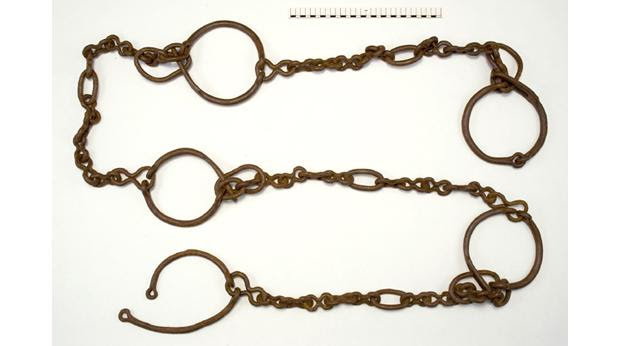
BREAK THE SHACKLES!