
‘Nid da lle gellir gwell’ – roughly speaking, ‘It’s not good if it could be better’. That saying will be familiar to every child who has been through Welsh medium education, and it’s a phrase that continues to send chills down my spine, even in my middle age. Having worked hard to create some piece of work or other, these words would always take the wind out of my sails and arouse feelings of disaffection towards whichever teacher had failed to celebrate the good, but rather chose to draw attention to the weaknesses.
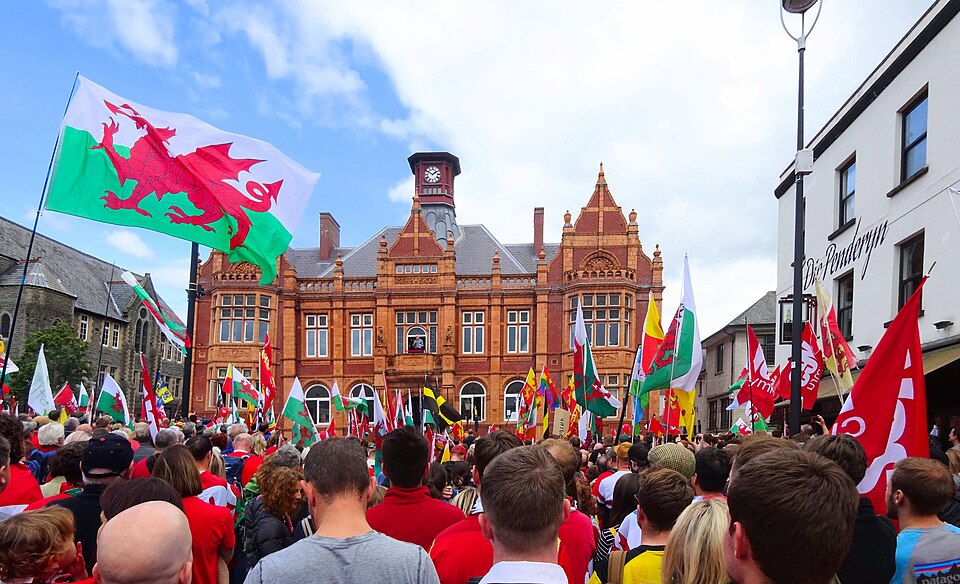
In that respect I am reluctant to direct the same comment towards Plaid Cymru and their supporters, only one day after the Lord Mayor’s Show. They deserve to celebrate a historic event that many of them, I suspect, feared they would never live to see. Seeing a tearful Elfyn Llwyd summed it all up on S4C, and said everything about the long, difficult and often painful path that these pilgrims have trodden. Da chi bob un.
A special congratulations also needs to go to this latest generation who have had to tread a lot further than usual in their huge new constituencies, and who have had to then face the grimmest poison online. As someone who has had a taste of canvassing over the years, I’m not sure that the average person has any understanding of how tiring the work of knocking doors can be.
And then, to have to take this on, while then returning to the persecution and hatred in the virtual world, one can only comment that the effort is genuinely heroic (my daughters will not be going near politics if it continues as it is). They are not of my denomination, so to speak, but these are genuinely brave, special people, and I am made up for them.
Revolution or Not?
Yet considering all the demonic forces at work, there is no time to lose either, because this is one battle in a series of collisions that will continue. Indeed, contrary to what the odd sage has been suggesting, we are now in the teeth of the revolution, which has been ongoing since the Brexit vote (and the election of Trump).
But what about the interregnum? you disciples of Gramsci may ask – that period of a vacuum where the old order is dying and the new cannot be born – which paves the way for the Revolution. Well, we might plausibly suggest the crisis that started that period was the financial collapse in 2008, which did not see the collapse of the old regime (even though it was dealt a semi-fatal blow) nor a genuine progressive step forward, beyond the open-ended Occupy movement, which in hindsight was rather a step to nowhere (although arguably laid the foundations for the future).
Since 2016 however we have been on the real battlefield, with revolutionary and reactionary forces fighting ever since. After the chaos of Brexit, the establishment then defeated Corbyn, while in Wales the independence movement ignited and then imploded (although don’t discount the establishment’s mysterious influence in that case either). In the more recent period it is of course the reactionary forces that have been in the ascendancy, trying to restore a Britain imperialistic in its attitude and ignoble in spirit.
This is to dramatize the situation too much, you may say.
But then consider what is coming in just three years time. The next battle of the revolution is the General Election, and one where it is possible that reactionary forces will rule over the island, and as many have pointed out, will be a real threat to the existence of our Parliament as well as that of Scotland. It could be a fatal blow to progressive forces, as the Restoration wields its force.
And even if you don’t want to describe all of this in terms of revolution, then it’s a useful metaphor to deploy to interpret what’s going on, and understand the kind of steps that now need to be considered.
Paint the Map Green
And here we get to the nub. Because it’s not enough now to take small steps. It is not the time to falter or draw breath. Neither is it a time for the fainthearted. Because by 2029 it requires that the political map is one that rather than reflecting the Wales of the Normans and the division between the Marches and Pura Walia, must be largely if not entirely green – as it was once was red, and before that yellow.
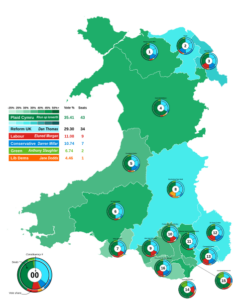
Because if we want to resist the Restoration, we will need political and spiritual unity among significant percentages of the people of Wales. And Plaid Cymru is now the vessel that carries that hope.
In that regard, as Elfyn Llwyd observed through his dewy eyes, Plaid’s victory is extraordinary in that it has created a basis throughout Wales, one that could lead to such a resounding result. Furthermore, as he pointed out astutely, ‘we have to build on that, and get on with it’. And there is no time to lose.
And so looking towards 2029, what does Plaid have to learn? Well, this is where they need an element of honesty, and resist deceiving themselves. And that is difficult, because who would deny a moment of pride and even vainglory to a group that has created history?
Nant Garw Crockery, not the Ming Vase
Yet despite there being many good people, who have done many good things, it must be recognized that it is largely circumstances that have created the opportunity for Plaid. The dramatic decline of Welsh Labour with Starmer’s dead hand helping from Westminster, and then a surge in a destructive power that has been enough to rally a sufficient number of people, so that they have been willing to vote for whatever power can keep Farage out of Wales.
Yet it’s fair to say plenty of people must have been sufficiently satisfied with Plaid Cymru’s ‘offer’ (although that’s the sort of phrase of political consumerism they need to stop using). And it is true to say that their economic plan is a substantial document that offers real solutions. But we must not blind ourselves with the notion that people have been somehow inspired, any more than the fact they are just very afraid.
Indeed it was perfectly clear that some combination of shouting ‘Stop Reform’ and carrying the ming vase a la Labour 2024 – with the odd bumper plate policy such as the childcare package – was the basis of the campaign’s success. And to a very large extent, this was a success.
But in the echo of Starmer’s election success lies the obvious danger, of course. Although that was a vote against the Conservatives on the whole, and nothing much substantive was ever promised in the Labour manifesto, we can see in the gory remains of Welsh Labor the consequences of the fact that nothing was done in terms of substance or rhetoric by the Starmer Government to improve everyday life or even promise improvements to come.
People in Wales will understand to a certain extent that Plaid will not have the same ability to create significant changes overnight, but they will not accept permanent stasis, nor a lack of a vision of progress that can maintain our hopes, and provide something to work towards in the medium term. We need more substance, more inspiration, and more imagination over the next three years, because of what is coming in 2029.
The Next Phase of the Revolution
Of course, with the ‘first past the post’ General Election system this will allow the same juxtaposition of hope against division that worked so well for Plaid Cymru this time – and if anything the lack of ambiguity compared to the Senedd’s D’hondt system will encourage greater tactical voting from Green and Labour voters. But it will be a hard task against a turquoise Tsunami, particularly in many constituencies where there will be no precedent for Plaid Cymru in terms of Westminster constituencies.
Furthermore, by then it is quite possible that there will be several other Councils under the leadership of Plaid Cymru after the 2027 local elections, and therefore there is a danger that Plaid will also suffer from the Party being ‘in power’. Among their tactics will be the need to install a raft of active councilors, that will foster candidates of substance and familiarity for 2029. But that campaign will also need to take place against a background where the dream continues, and some of the energy seen on the steps of the Senedd yesterday will be aflame.
Because if the electoral map of Wales is half blue after 2029, the nation, not to mention the Senedd, will be in danger. It is true to say that Farage suggested that the Scots would be welcome to hold another referendum if it became relevant, and one plausible way of interpreting this is that he, as an English nationalist, doesn’t really care if the Scots want to go their own way. They will be more trouble than they are worth.
But I suspect the same attitude will not extend to the ‘internal other‘, the Welsh, if a number of our constituencies show a desire to remain with Reform and Westminster. Dominance over the Welsh is too essential an aspect of a certain ruling English psychology to let it go without a fight.
Of Spirit and Practice
The future of Wales is at stake, without a doubt. The good news is the momentum that is already gathering behind the collaboration and mutual interest of the Celtic Fringe, and the gestures that are reaching us, especially from the Emerald Isle. They have already sensed what is afoot on the other side of the Irish sea, and that there is no time to lose as the revolution progresses. But the danger for Wales, without the 2029 electoral map painted green, is that we will be absorbed not into a Celtic Revolution but into an English restoration.
So the poets need to sing, and indeed the whole of Welsh civic society and its creative community need to join the revolution and carry the dreams and aspirations of a nation over the next period – especially in the absence of the ability to create sufficient substantive change in people’s lives in a short time (although occasionally pointing out the restrictions under which the Senedd works is no bad thing, where it doesn’t sound like empty excuses). Plaid need to be bold, daring and cunning, consolidating their gains and reaching out to the new support and beyond. In a word they must start on the work of nation-building, and make up for the lost years of devolution.
At the same time Wales needs to show that improvements are coming and are happening little by little, but even in order to secure such small victories a radical effort will be required.
To that end, it would be wise to reflect on the warnings and reflections of Lee Waters from the point of view of understanding how to deal with the challenges of governance, including a civil service which by its nature is resistant to change. They will need to challenge and demand honesty from each other, and not fall into believing their own rhetoric in the way their predecessors did.
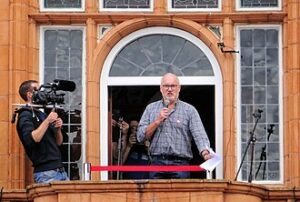
And it will be necessary to be brave – and that starts with Rhun (who in the style of Rhodri and Carwyn, must be addressed by his first name) and the make up of his cabinet, and the other people he invites into the inner circle such as the SpAds and other specialist advisers.
In the spirit of revolution, while recognizing the need for the occasional old hand, he will have to avoid the temptation to reward service and bow to hierarchies, and prioritize those who have the judgement, talent and ‘real world’ experience in order to drive them forward. And with the Senedd’s new enhanced numbers and scrutiny capacity what about creating a bigger cabinet with more specialized briefs to accommodate such new faces? My own sector, Higher Education – in crisis like so many others – is crying out for its own Minister in cabinet, not some junior role with no place at the table. We need challenging and radical voices, and all the better if this most visible group represents the whole of Wales in terms of the regions – especially those on the electoral frontier. People who have not voted for them this time, must be shown what Plaid promises for them.
Felly Ymlaen. Onward then.
Onward with the revolution.